Research Projects
Phase 1: Legal Ideology in Tibet: Politics, Practice, and Religion
AHRC-funded Project (2016-2018)
The first phase focused primarily on collecting, translating, and summarizing extracts from nearly thirty Tibetan sources that contain references to law and legal practices. These texts range from historical chronicles to religious histories, providing valuable insights into how Tibetans wrote about and understood law throughout different periods. The members of the project examined these texts in detail, in order to trace the different strands of legal thought that emerged during this period. They explored tensions between them and examined attempts by Tibetan writers to reconcile religious, ethical, and jurisprudential ideals. The approach was socio-historical, involving close examination of textual sources, but considering legal, ethical, and religious ideas in their social and political contexts. Legal thought during this period remained largely unsystematic, shaped by multiple intellectual traditions and characterized by tensions between the demands of penal practice and Buddhist ethical principles.
As part of the project, Charles Manson and Fernanda Pirie completed a full translation of The Mirror of the Two Laws (Khrims gnyis lta ba'i me long), a foundational legal treatise commissioned by the Pakmodru government following the collapse of Mongol Yuan rule in 1368.
Project outputs included:
- Summaries and translations of extracts from key Tibetan texts
- A complete translation of the Mirror of the Two Laws
- For all publications from Phase 1, see Bibliography


Phase 2
John Fell Fund Project (2024-2025)
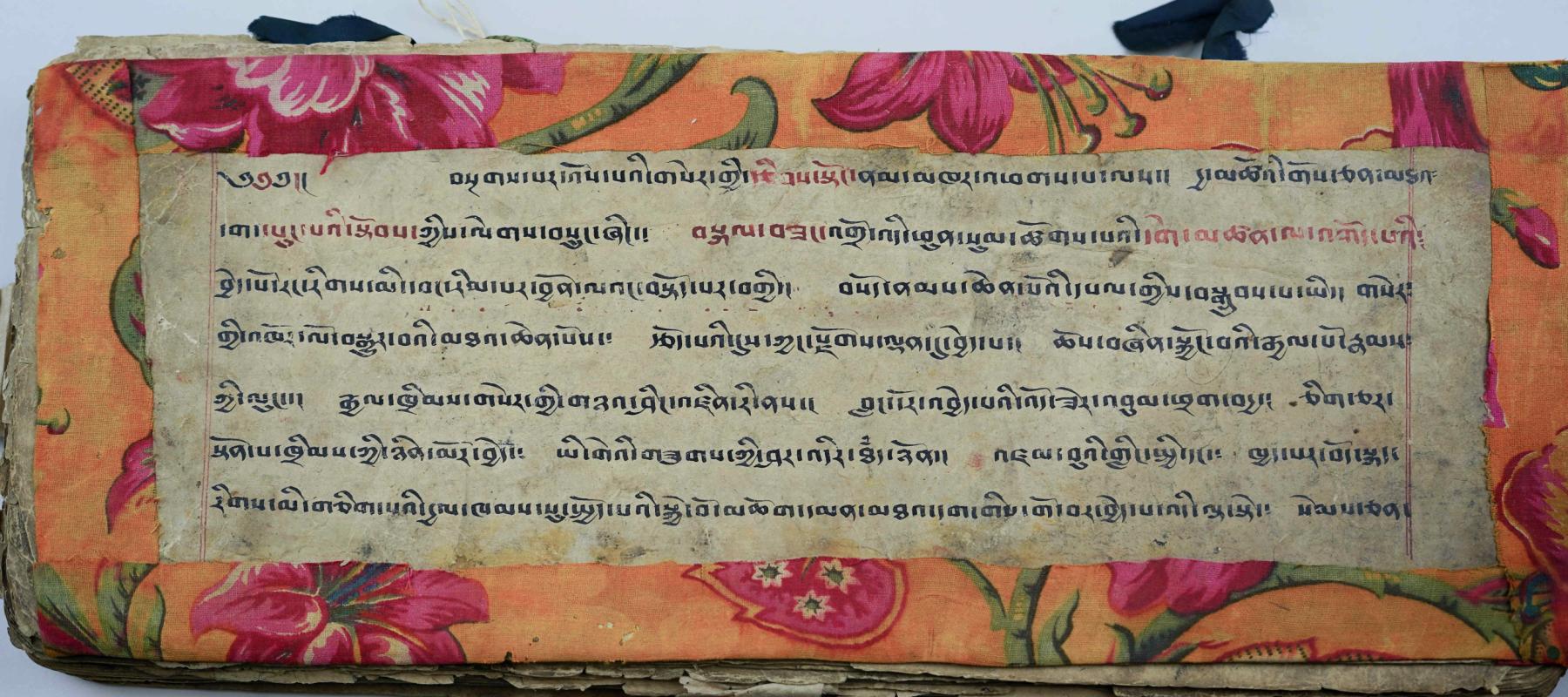
The second phase examined the Tibetan legal text Zhal lce bcu drug (Legal Pronouncements in Sixteen Chapters), which represents an important development in Tibetan legal literature. The text shares many chapter titles with the earlier Mirror of the Two Laws (Khrims gnyis lta ba'i me long), while introducing new elements that reflect both the changing political circumstances and administrative needs of 17th-century Tibet. The text played a significant role in the formation of the Ganden Phodrang government under the Fifth Dalai Lama and appears to have served as a template for subsequent legal developments, though the exact nature of its influence and practical application remains a subject for future investigation.
Project outputs:
- Producing a critical edition of the zhal lce bcu drug by comparing available manuscripts and block prints
- Creating an annotated translation of this important legal text
- Analyzing its relationship to earlier legal works
Phase 3: Translating the Dalai Lamas' Legal Texts
Leverhulme Project (2025–2028)
We are examining, transcribing, and comparing all known versions of the zhal lce, working from both physical manuscripts and digital copies. We use the AI-powered platform Transkribus to help transcribe handwritten documents, with manual proofreading. Differences between versions — in wording, in how they are bound, in handwritten notes and tables added by their users — give us evidence of when and by whom each copy was made, and how it was used.
The zhal lce bcu drug was commissioned during the reign of Karma Tenkyong Wangpo (r. 1621–1642), leader of the Tsang regime, and drew on earlier legal texts. When the Fifth Dalai Lama together with the Mongol ruler Gushri Khan (1582–1655) defeated the Tsang, he adopted much of his rival's legal text. We are investigating why, and what role Mongol administrators and legal ideas played in shaping these texts.
The Dalai Lamas' government lasted over four centuries. We are tracing how the zhal lce were reproduced, revised, and distributed during that time, and what role (if any) they played in actual court proceedings. Intriguingly, documents recording the resolution of disputes never refer to the zhal lce, and at the Sakya court the copies were reportedly kept out of public view. We are looking into why.
The project will result in a book tracing the history of Tibetan law from the earliest records in the seventh century through to the mid-twentieth. It will ask why Tibetans made law at all, what they hoped to achieve, and how they drew on Chinese, Indian, and Mongol traditions while producing something quite different from any of them.