Overview
Over thirteen centuries, Tibetan elites developed unique concepts of law, created legal texts, and formulated sophisticated ideological accounts of law's place within their political and religious landscape. When writing was first introduced in the seventh century, Tibetan rulers commissioned laws and recorded legal practices. As the Tibetan empire collapsed in the ninth and tenth centuries, new ideas emerged concerning the nature of Tibetan law and its relationship with Buddhist morality.
Throughout subsequent centuries, multiple authors - both religious and secular - engaged with different concepts of law, from authoritative rules and religious morality to precedent and dispute resolution. While Tibet never developed what could be called a 'legal system' in the conventional sense, various rulers, religious leaders, and communities undertook practices of discipline, governance, and conflict resolution that remained distinctively Tibetan, creating a rich textual tradition that continued into the twentieth century.
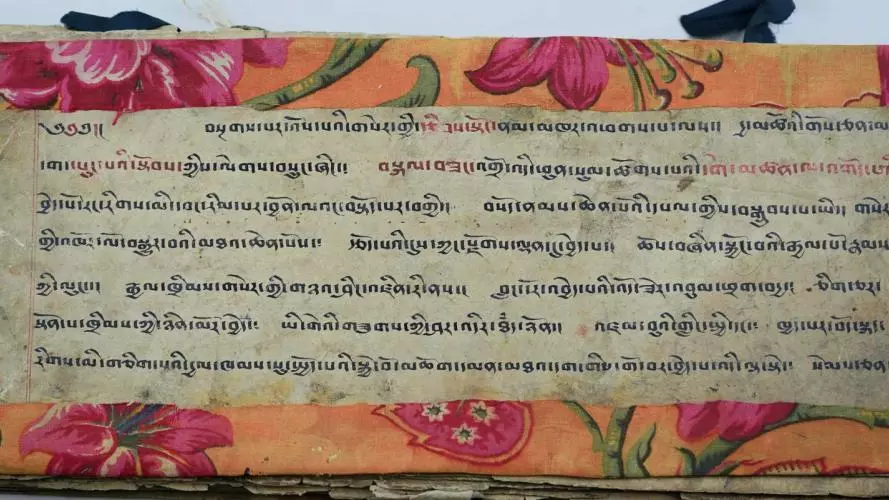
This website lists Tibetan historical documents from the time of the late empire up to the seventeenth century, which are legal or relevant to law in some way.




Narratives and extracts (10th–16th centuries)
From the fall of the empire through the medieval period up to the mid-16th century, Tibetan writers documented their understanding of law (khrims) and legal traditions within broader historical chronicles and religious texts. This collection presents extracts from historical narratives and religious writings that contain discussions of law and governance.
These materials, gathered and analysed under the AHRC-funded project "Legal Ideology in Tibet: Politics, Practice, and Religion," reveal how different strands of legal thought emerged during this period, particularly focusing on how Tibetan writers attempted to reconcile religious, ethical, and jurisprudential ideals.
Legal texts in translation (14th-17th centuries)
After the collapse of the Mongols' Yuan administration in 1368, the central Tibetan Phakmodru regime commissioned The Mirror of the Two Laws (Khrims gnyis lta ba'i me long), a foundational legal treatise, which presented guidelines for judges and mediators.
Following another period of political disunity, a new line of rulers, the Tsangpa, rose to power in central Tibet. In the early seventeenth century, they made a number of legal texts, including a code of legal rules and a set of guidelines for officials, later known as the zhal lce bcu drug. These texts were, in turn, taken up by the political regime of the Dalai Lamas, know as the Ganden Podrang, and incorporated into different foundational collections of texts. These materials are the subject of the current research project. Translations will appear on this web-site.